

Why More Labor Isn’t Always the Answer
Hidden work in grocery retail rarely appears on a task list, yet it consumes store time every day. Grocery retailers are not short on priorities. They are short on time, labor, and room for inefficiency. Every rescan, price check, self-checkout intervention, and manual item lookup pulls store teams away from higher-value work and adds friction to the customer experience.
When those slowdowns become routine, the instinctive response is often to add labor. More associates at checkout. More support on the floor. More resources dedicated to exceptions and customer issues.
But adding people does not remove the work causing the slowdown. The better opportunity is to reduce the routine interruptions, manual steps, and disconnected interactions that consume associate time across the store.
For grocery retailers, that means looking beyond isolated transactions and improving how items, information, and customers move from receiving to the aisle to checkout.
Walk through a typical grocery store and most operational problems seem small when viewed individually.
A cashier pauses to rescan an item. An associate leaves the floor to perform a price check. A self-checkout attendant intervenes to resolve an exception. A customer waits while an item is identified manually. A bulky item requires additional handling before it can be processed.
None of these activities appears significant on its own. Collectively, however, they create an enormous amount of hidden work.
When associates spend time resolving avoidable interruptions, they are not stocking shelves, assisting customers, supporting fulfillment activities, or completing the tasks that keep the store moving.
The productivity opportunity is not simply to complete each task faster. It is to reduce how often routine store activity turns into an exception that requires additional labor.
Checkout is one of the clearest places to see the impact of hidden work. Customers may never see receiving operations, replenishment activity, or inventory workflows. They always experience the front end.
A missed read, difficult barcode, manual lookup, or self-checkout exception may add only a small delay to one transaction. Repeated across lanes and shifts, those interruptions can slow throughput and redirect associates from other responsibilities.
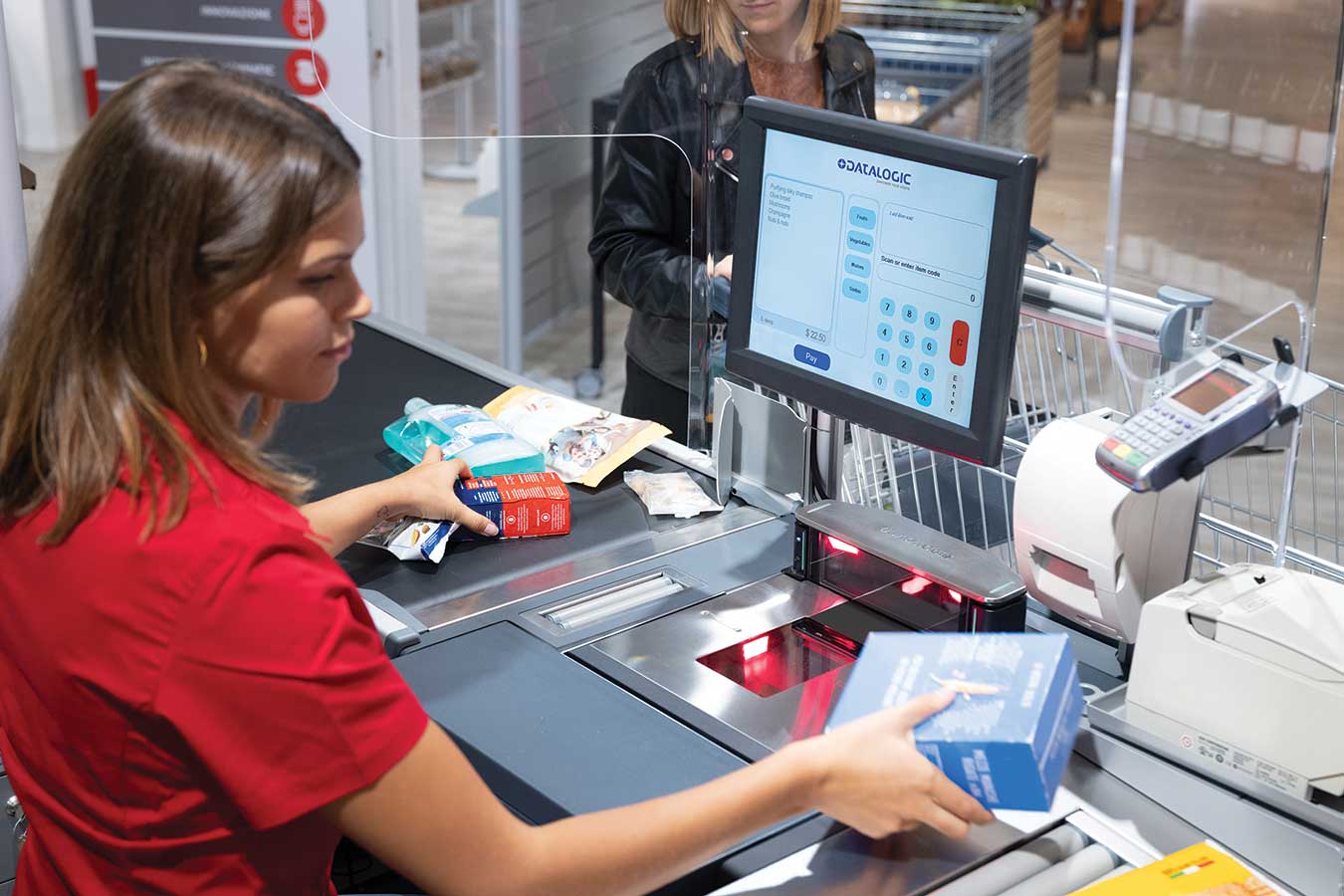
Datalogic’s Magellan portfolio supports attended checkout and self-checkout environments with scanning capabilities designed for the range of barcodes and items grocery teams encounter. By helping stores capture items accurately and keep transactions moving, the technology addresses the point where operational friction becomes most visible to the shopper.
Checkout improvement is not only about shortening the final interaction. It is about reducing the avoidable work that accumulates around it.
Many checkout interruptions begin elsewhere in the store. An unclear price, an item that is difficult to identify, or information that is not available when it is needed can follow the shopper and the associate all the way to the front end.
That makes grocery productivity a connected workflow challenge. Receiving, replenishment, inventory checks, item identification, customer self-service, and checkout all depend on fast, accurate access to product information.
Datalogic solutions such as the Gryphon 4600, Magellan 900i, and Smart Portal support different moments in that journey. Together, they give grocery retailers options for fixed scanning, handheld data capture, and customer-facing self-service across the store journey.
The value is not a longer list of devices. It is a more continuous flow of information from the back of the store to the point of purchase.
Store associates regularly move between tasks, departments, and customer needs. When identifying an item or confirming information requires leaving the work area, finding another system, or waiting for assistance, even a simple task can consume more time than it should.
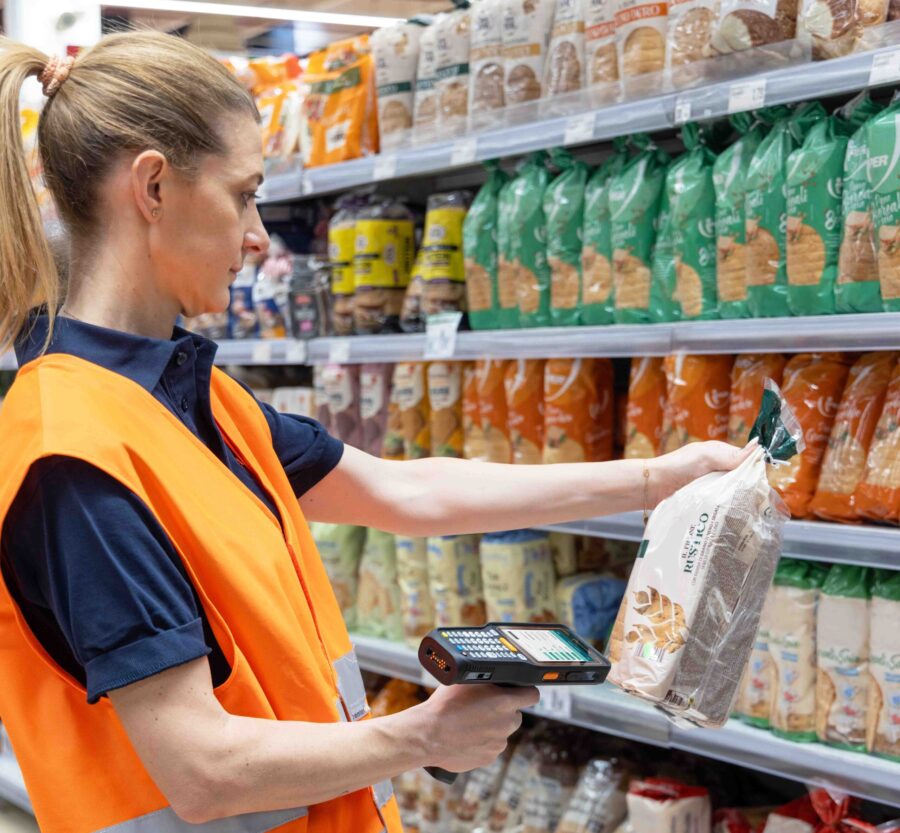
Handheld scanning can support faster item identification across receiving, stocking, and service workflows. At the front end, presentation and handheld scanning options can help associates process items that are difficult to move or position. The objective is to bring the right data capture capability to the work instead of forcing the work around a fixed process.
Reducing these extra steps helps associates remain focused on replenishment, customer support, fulfillment, and checkout rather than absorbing routine delays throughout the shift.
Price and product questions often become front-end problems because checkout is the first place shoppers know they can get an answer.
Datalogic Smart Portal gives retailers a way to address those needs earlier by providing self-service access to price and product verification on the sales floor. That can help shoppers resolve routine questions independently before reaching the lane and reduce the number of simple requests that require associate intervention.
Self-service is not about removing the associate from the experience. It is about reserving associate time for the moments where judgment, service, and problem-solving matter most.
Grocery retailers do not need technology for technology’s sake. They need practical ways to reduce repeat interruptions across the workflows that shape store productivity and customer experience.
DecisionPoint Technologies brings Datalogic scanning, data capture, and self-service technologies into the retailer’s operating environment, connecting each capability to the grocery workflows where it can have the greatest impact. As the edge technology integration leader, DecisionPoint helps retailers address friction across checkout, store operations, and the supporting supply chain without losing sight of the business outcome.
That combination gives retailers a path to reduce hidden work at checkout, on the sales floor, and in the operational moments in between.
The stores that perform best are not simply adding more people to absorb inefficient work. They are finding practical ways to reduce the rescans, lookups, interventions, and manual steps that slow associates and shoppers down.
For store teams, that means more time focused on shelf availability, customer service, fulfillment, and checkout. For the business, it means using existing labor more effectively while creating a faster, more consistent store experience.
The opportunity begins by identifying where routine work is becoming hidden work, then connecting each workflow to technology designed to keep it moving.
Turn store productivity into a practical advantage. Connect with a DecisionPoint Technologies retail technology specialist to explore how Datalogic solutions can reduce friction across your grocery workflows.
We promise it will be worth it.
